Disposal of Assets: A Life-cycle Perspective
Summary
Australia’s journey towards protecting the environment had a rocky start but quickly grew after a series of both national and international events and growing social awareness towards the environment.
In recent years we have seen the conversation turn global as the world seeks solutions to climate and other environmental issues. An improved infrastructure is needed to support the many initiatives proposed by the Australian Government. Australia has many asset intensive industries, calling for a need for a life-cycle perspective to asset disposal.
IND’s vision is to bring better knowledge about innovative wear prevention and remediation solutions that can strengthen client’s infrastructure and save them money whilst preventing unnecessary disposal of assets.
The history of environmentalism
The subject of environmental protection, like most things, started as an initial concern by various populous groups partly due to a series of environmental disasters and partly due to the growing awareness of impacts to the environment in response to the significant growth of various industries. This sparked a growing conversation, which eventually seeped into governmental bodies such as the United Nations and American government, leading to the birth of the United Nations Environment Program (United Nations Framework Convention on Climate Change, 2025) and the creation of the US Environmental Protection Agency (U.S. Environmental Protection Agency, 2025).


Early environmentalism in australia
In Australia we had our own journey with environmentalism, sharing many similarities with the US as pointed out in their book Killing the Koala and Poisoning the Prairie: Australia, America, and the Environment (Bradshaw and Ehrlich, 2015) as both being highly developed super consumers with large energy footprints. Australia’s journey with environmentalism began with a rocky start as early settlers brought ideas of development of a new colony, conquering the wilderness and establishing thriving industries
The earliest form of environmentalism in Australia could be seen in the clash of settlers and indigenous peoples as Aboriginal nations fought to preserve their cultural way of life. (CJAB, 2025) However, there were many early settlers who were passionate about Australia’s unique flora and fauna, leading to the establishment of the Royal National Park near Sydney in 1879, believed to be the second national park in the world after Yellowstone. (Strom, 1979)
Perhaps Australia’s most defining moment for environmentalism was the 3 month blockade at the site of a proposed dam in the value of Tasmania's Franklin River, highlighting the growing recognition of environmentalism in Australia and starting a top down and bottom up approach through policy and volunteer groups such as Landcare and the Wilderness Society. (Australian Environmental Grantmakers Network, 2014)
Environmentalism in Australia today
Today the Australian population is much more cognisant of environmental issues, with a 2023 study by Sustainability Victoria (2023) finding 1 in 10 Victorians now rate climate change as the top priority issue for the government, compared to 1 in 50 in 2010. This growing awareness has resulted in the success of many grass roots movements and even fueling ethical/environmental job recruitment. (Environmental Jobs, n.d.)
Governmental response to public awareness has also grown, with each State rolling out their own initiatives for waste management and sustainability. (NSW EPA, n.d.) Australia’s presence in the global discussion has also increased with most notably the signing of the Paris Agreement. In response, the Australian government is implementing a variety of initiatives under our Net Zero Plan 2050 as part of our commitment to the Paris Agreement. (DCCEEW, n.d.) This plan focuses on a range of strategies across all sectors, knitting together opportunities for top down and bottom up collaboration between individuals, communities, industries and government bodies.
A critical success factor for Australia’s contribution to the environment will be for industries to understand how they can contribute to the movement. The subject of environmentalism is a systematic one, the human impact on the environment as part of the global system. (Yilmaztürk, 2019) Most system improvement methodologies begin with defining/understanding the problem. As with all wicked problems, this is tricky due to the multi-faceted complexity faced by Australia and our international neighbours.
How asset management is a key success factor for Australia’s economy
A consistent issue addressed throughout the various governmental strategies is the need for infrastructure to support our goals for a sustainable future, specifically assets as a critical component of such infrastructure. Resource, energy, mining transport, etc are examples of asset intensive industries which form the core of Australia’s economy. Such industries have historically had a heavy impact on health and safety, social and environmental outcomes in Australia and will also be critical in the success of the “Future Made in Australia Plan”. (Australian Government, n.d.)
In 1995 the Australian National Audit Office (ANAO) examined management of assets held by the general government sector (excluding specialised military equipment). According to their report (1995-96), they found 8 overall findings, 2 of which were:
“Acquisition planning decisions were often made without considering alternatives to asset acquisition or life-cycle costing covering all associated costs”.
“Most of the organisations reviewed did not have an asset disposal plan. Consequently, disposal decisions were sometimes made on an ad hoc basis often with less favourable outcomes.”
(Australian National Audit Office, 1995)
There have been great leaps forward since the time of this report, with many departments implementing their own asset frameworks such as the South Australian Department for Infrastructure and Transports’s (n.d.) “Strategic Asset Management Framework” (SAMF).
What is asset management?
Engineering Australia (Engineers Australia, n.d.) defines asset management as being a purposeful and coordinated approach to realising value from their assets involving multiple departments/functions working together within an agreed system.
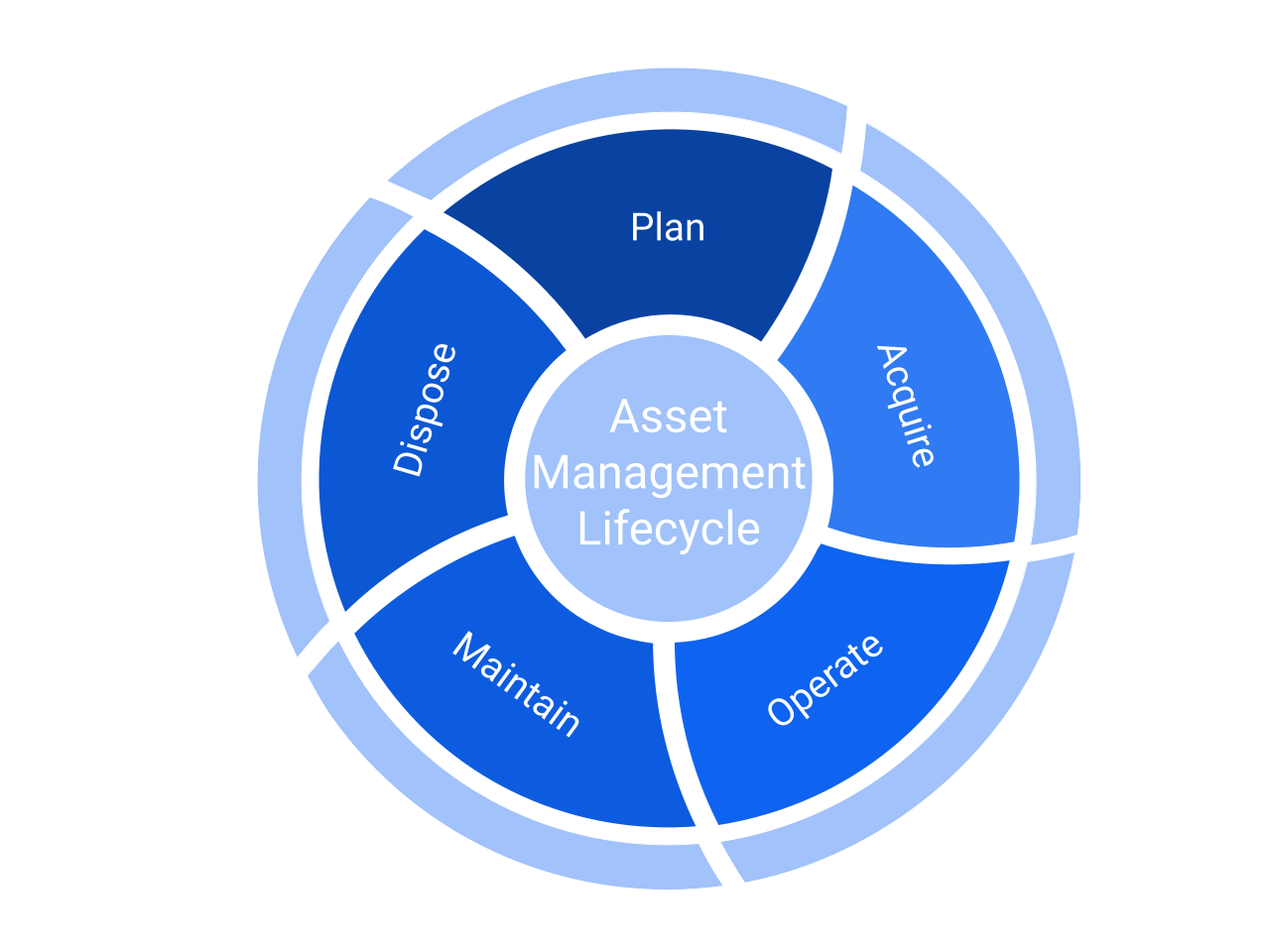
There are typically 5 phases of assets management. Referred to as an asset’s “lifecycle”, an asset spends most of its life in the “operation” and “Maintain” stage but the success of an asset depends on all stages being considered together.
As an asset ages, there is a potential for reduced reliability, addressing this is often a trade off between cost/benefit and risk. There should be a planned approach when considering the potential disposal of an asset, a typical disposal planning process usually involves:
Identify which asset(s) are potentially reaching end of life
Benefits of disposal vs retention
Maximising any potential value for the business (fiscal, strategic, other)
Disposal mechanism (how will the asset be disposed of)
Implementation of the disposal plan (New South Wales Treasury, 2006)
When asset disposal occurs as an end of life solution, many organisations fail to consider the true cost, which could include:
Engineering
Environmental plans
3rd Party consultations
Governmental permits
Transportation
Dismantling/demolition
Opportunity costs
3rd Party contractors
Internal labour costs
Waste disposal for all non-recyclable parts
Extra costs for hazardous substances
Soil and other environmental tests
Many such assets can still provide acceptable service if paired with the correct maintenance strategy. Often maintenance is looked at one dimensionally as an unavoidable cost without any recognition of contribution to sustainability. When you consider the value of maintenance then it becomes much more critical. (Campbell et al., 2024)
In our experience, the key reasons for the current approach of asset replacement over refurbishment are:
Difficulty in fitting long-term life cycle value into short term budgetary corporate constraints.
Lack of understanding of modern product solutions and their advanced capability in asset preservation.
Difficulty in knowledge transfer of repair and maintenance solutions with client personnel due to high internal staff turnover.
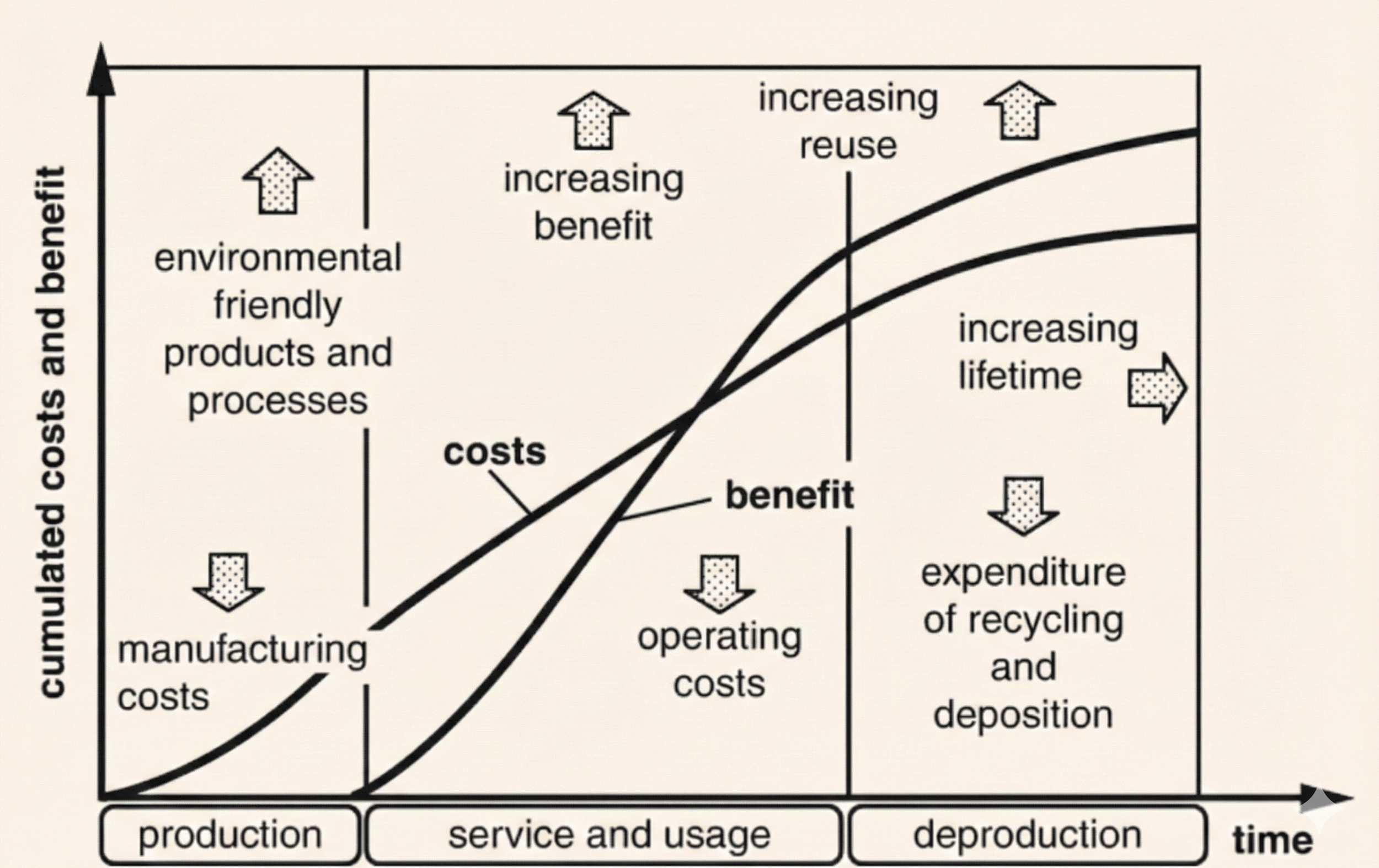
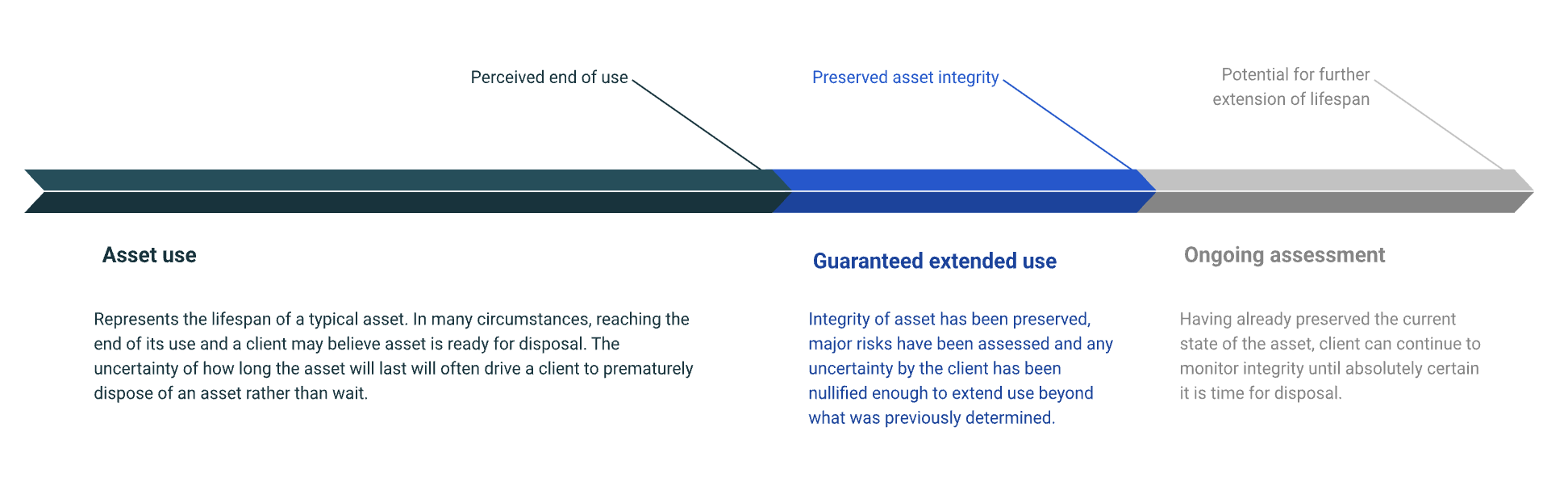
The figure below, shows an opposing view to the previous figure whereby benefit can increase when increasing any asset’s lifecycle. It is IND’s position that failing to innovate and consider fresh solutions can lead to a reduction in opportunities for lifecycle cost savings. However, increasing reuse of an aging asset through the latest technical advancements in coatings and other protections can lead to an increase in benefit, longer lifecycle and prevention of premature disposal costs
Our vision for a life-cycle perspective for asset management
Disposing of assets is a reality of our global systems and accounts for a significant part of the full life-cycle cost of an asset. Costs associated with disposal can be significant because of the [often] difficult nature associated with the disposal of such infrastructure assets. (Investopedia, n.d.)
Many assets are disposed of prematurely due to any of the following reasons:
Uncertainty or perceived obsolescence
Risk assessment failing to take account of all the options available
An unawareness of technologies and products which may extend the life of an asset
There has often been an assumption that all businesses should reduce their footprint and use more environmentally friendly products. This approach fails to consider the environmental upside such products i.e. paints and other coatings can provide. Application of a specialised epoxy system on an aging asset may contribute initially to the carbon footprint but would significantly offset the vastly increased footprint of disposal and replacement of an asset.
The IND vision is to challenge industry norms and bring a fresh perspective for how our industrial services can provide value to the market whilst not losing focus on our biggest stakeholder, the environment. This will require a change to how wear prevention, maintenance and repair is seen and managed in the Australian industry.
This change demands a life-cycle perspective, understanding that an asset saved will provide value on 2 main fronts:
Cost of scrapping the asset
Cost of procuring a replacement asset
Conclusion
The success of any infrastructure is the integrity of its assets, thus, requiring rigorous asset maintenance strategies to increase asset life span. Many assets may not be receiving the treatment which could be afforded to them due to many reasons.
Failing to innovate and consider fresh solutions can lead to a reduction in opportunities for lifecycle cost savings. However, increasing reuse of an aging asset through the latest technical advancements in coatings and other protections can lead to an increase in benefit, longer lifecycle and prevention of premature disposal costs
IND want to be seen as an Australian leader in specialty protective coatings services with authority in unique and specialist knowledge, promoting best in class coating and solutions that are best fit for each asset.
In this way IND aim to prevent needless replacement or faster replacement where assets could have had extended lifespan if managed properly, thus, contributing to the circular economy and allow for reuse and recycling of assets as a priority over replacement.
There are various frameworks for asset management, some focusing more of an accounting perspective while others taking a more holistic approach such as those developed by the New Zealand Asset Management Support (NAMS) (Apopo, n.d.)
However, many asset management frameworks are built in reference to the ISO 55000 set of stands which defines assets as any “item, thing, or entity that has potential or actual value to an organization” (International Organization for Standardization, 2024)
A good asset management plan will also provide the following:
Improved efficiency and prevent downtime
Reduced operating costs
Easier and more reliable decision making
Increase environmental impact by extending asset lifespan
Asset lifecycle: a key component of asset management
Asset lifecycle management is a strategic approach to stewarding a physical asset across its lifecycle. Asset lifecycle management connects people, processes, data, technology, and systems across the asset’s entire lifespan — from planning, design, and construction through operation and maintenance. (Trimble, 2024, para. X)
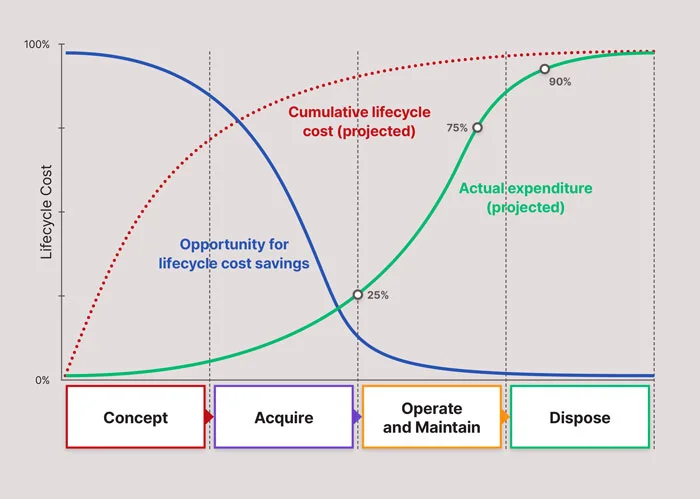
Decisions made at the early stages of an asset lifecycle can significantly reduce the total cost of ownership (TCO). The opportunity to reduce the total cost of ownership drops dramatically over the course of an asset life, as seen in the figure below: